Website content management is a vital process for the success of a website. Website content is one of the most important elements available to a website’s visitors and if not managed properly, website performance and user experience can be severely affected.
Here are some tips to be more efficient about website content management:
- Content quality: The quality of your content is one of the most important factors that determine the success of your website. Your content should be original, engaging, informative and add value to your readers.
- Monitoring content releases: Track your website’s content performance and re-edit or republish content that fails.

- Social media: Increase the visibility of your website by sharing your content on social media platforms. Social media is an excellent platform for the sharing and dissemination of your content.
- Using a content management system: A content management system is a tool that helps you easily manage and publish content. By using a content management system, you can manage your content faster and easier.
Website content management is a process that has many factors that affect the success of your website. By following the tips above, you can make content management more efficient.
In conclusion, website content management is a vital process for your website’s success. Plan your content, schedule it, make it SEO friendly, create quality content and track performance. You can also improve the performance of your website by considering visual elements, mobile compatibility, and analytics and reporting.
Content quality
Content quality is the evaluation of the content published on the website according to certain standards. Content quality depends on the quality, accuracy, originality, attractiveness, usefulness, and usefulness of the content presented to readers.
Content quality is very important to increase the number of visitors and site traffic of websites, to rank higher in search engine rankings, to increase brand awareness and to influence the target audience. The high quality of the content increases the reputation of the website and makes the readers trust your site.

Content with good content quality attracts readers and increases the number of visitors to your website. Content with high content quality is also important in terms of search engine optimization (SEO). SEO compatible content helps your website rank higher in search engine rankings.
Some factors for determining content quality are:
• Originality: Content must be unique and not copied or stolen content.
• Add value to readers: Content needs to be useful to readers, answer their questions, or provide information.
• Language and spelling: The language of the content must be correct and understandable, and must comply with the spelling rules.
• Images: It is necessary to use images suitable for the content, and the images should be of high quality and in the right size.
• Structuring the content: Structuring the content into headings, subheadings and paragraphs helps readers to follow the content easily.
Content quality is a critical factor for a website’s success and plays a huge role in determining content management strategies.

Content posting tracking
Content publication tracking is a process that allows you to monitor the performance and effectiveness of your website content. This process measures how effective your website’s content is and provides important data for future content strategies and planning.
The following factors are recommended for tracking content releases:
• Number of visitors: Each content can get a different number of visitors to your website. Therefore, the number of visitors for each content is monitored to determine which content is more popular.
• Pageviews: Each content can get a certain number of pageviews on your website. This number shows which pages of your website are visited the most.
• Content type: It is also important which content types are visited more. This information provides ideas for future content planning.
• Conversion rate: The purpose of your website is to convert your visitors into customers. Therefore, by monitoring the conversion rate of your content, you can determine which content increases customer conversion.
• Number of social media shares: How much your content is shared on social media is also a factor to be followed. Content shared on social media allows your website to reach wider audiences.
• Backlinks: The feedback about your content is important to measure the content quality of your website. These feedbacks also provide ideas for how your content can be improved.
Tracking content publications measures your website’s content performance and provides important data for future content strategies and planning. Therefore, as a part of the content management process, it is necessary to give importance to the follow-up of content publications.
Social media
Social media refers to a set of platforms where people can interact with other people through the internet. Social media allows people to communicate and exchange information with each other using many different forms of interaction such as messaging, sharing, commenting, liking, following. These platforms allow content to be shared in many different formats. These can be photos, videos, audio recordings, text and many more different formats.
Social media platforms can be used by people for personal use, as well as by brands and businesses as a marketing tool. Businesses use social media to more easily reach and interact with their target audience. These interactions can be used for business activities such as promoting products or services, customer service, and customer relationship management.

Social media has become a place where most of the internet users spend time today. Therefore, social media platforms have become an important field for marketing and advertising activities for businesses. Businesses can reach their target audiences and promote their brands through social media platforms. However, the use of social media brings with it some risks, for example, online reputation management, crisis management and user data protection become important.
Content management system usage
A content management system (CMS) is a software tool used to manage, organize and publish the content of a website. CMS makes the process of creating and managing content easier for website owners. With the CMS, websites can edit and update the content on the website without the need for a web developer.
CMS consists of several different components:
• Database: CMS uses a database that hosts all the content on the website. This database makes it easy for users to find the content they are looking for on the website and for administrators to organize their content.
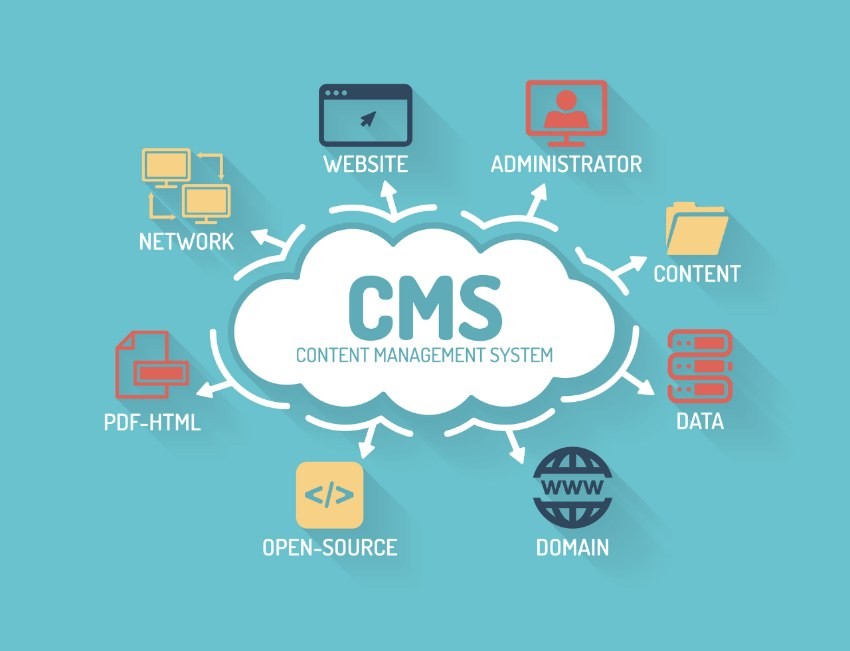
• User interface: CMS provides users with a user interface to manage the content of the website. This interface allows users to perform operations such as editing, adding and publishing content.
• Theme and plugins: CMS provides themes and plugins to change the design of the website. These themes and plugins can be used to change the look of the website or increase its features.
CMS has many advantages:
• Content update: CMS makes it easy to update the content of the website. Users can make a few clicks to edit or update the content on the website.
• Multi-user: CMS allows multiple users to edit the content of the website. This allows multiple authors to manage and edit content on the website.
• Content consistency: CMS ensures the consistency of the content of the website. By using CMS, website owners can easily manage and update all the content on the website.
• Content security: CMS offers many security features that help protect the content of the website. CMS ensures that the content of the website is protected from unwanted access.
• Scalability: CMS allows the website to grow and scale. By using CMS, website owners can easily manage their content and update their content as the website grows.
CMS is a tool that simplifies the process of creating and managing content for website owners.